How Do You Choose the Right Dining Table Size for a Formal Dining Room?
Choosing the right dining table size starts with measuring your dining room, allowing at least 36 inches of clearance around the table, and determining how many people you want to seat comfortably. For formal dining rooms, 42 to 48 inches of clearance is often preferable, especially when guests need room to move around seated diners. The ideal table balances proportion, functionality, and style.
A formal dining room should feel elegant, inviting, and comfortable, whether you’re hosting a holiday celebration or enjoying a quiet dinner with family. However, selecting the perfect dining table involves more than finding a beautiful piece of furniture. The size, shape, and placement of your table directly influence how the entire room functions.
At hōme•ol•o•gy, thoughtful interior design begins with understanding how homeowners want to experience their spaces. From furniture selection and space planning to custom furnishings and finishing details, a cohesive design considers both aesthetics and everyday practicality. A dining table should complement the architecture of your home while providing comfortable seating and effortless movement. Understanding a few essential measurements can help you make a confident investment in a dining room that feels beautifully proportioned for years to come.
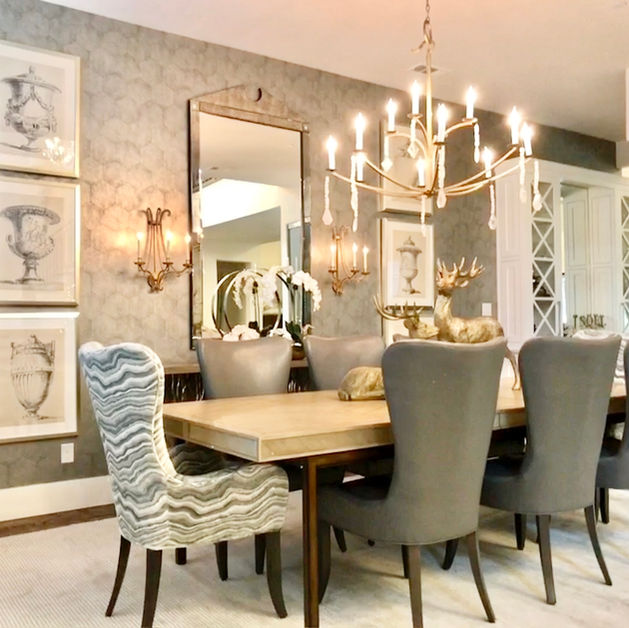
Formal Dining Room Dimensions: Finding the Perfect Balance of Space and Style
How Much Space Should You Leave Around a Dining Table?
Allowing sufficient clearance around your dining table is one of the most important considerations in formal dining room design.
As a general guideline, plan for:
- 36 inches minimum: Provides basic space for pulling out chairs and moving around the table.
- 42 inches: Offers more comfortable circulation for everyday dining.
- 48 inches: Creates a more generous layout for formal entertaining and larger gatherings.
These measurements should be taken from the table’s edge to the nearest wall, furniture piece, or other obstruction.
For example, a dining room measuring 12 feet by 14 feet can typically accommodate a table approximately 72 inches long and 36 inches wide while maintaining about 54 inches of clearance at the ends and 54 inches along the sides, assuming the table is centered and no additional furniture reduces the available space.
However, if your dining room includes a buffet, china cabinet, or other furnishings, those pieces must also be included in your measurements.
A professional interior designer can help evaluate these dimensions to create a layout that feels open and comfortable without sacrificing the room’s visual impact.
What Dining Table Size Do You Need for Six, Eight, or Ten People?
The number of people you plan to seat is another essential factor when choosing a formal dining table.
A useful starting point is allowing approximately 24 inches of table-edge space per person, although 26 to 30 inches can provide greater comfort for formal dining.
| Seating Capacity | Typical Rectangular Table Length |
|---|---|
| 4 to 6 people | 60 to 72 inches |
| 6 to 8 people | 72 to 96 inches |
| 8 to 10 people | 96 to 120 inches |
| 10 to 12 people | 120 to 144 inches |
These dimensions are approximate. Actual seating capacity depends on table width, leg placement, chair dimensions, and whether guests sit at the ends.
If you frequently entertain, consider a dining table with extension leaves. This provides flexibility for larger gatherings without requiring an oversized table throughout the year.
For homeowners who enjoy hosting elaborate dinners, a table width of approximately 40 to 44 inches can provide additional room for centerpieces, serving dishes, and formal place settings.
The goal is to create a dining experience where everyone feels comfortable rather than crowded.
Is a Round or Rectangular Dining Table Better for a Formal Dining Room?
The best dining table shape depends on your room’s proportions, seating requirements, and overall design style.
Rectangular dining tables are particularly well suited for long, narrow dining rooms. Their linear shape complements traditional dining room layouts and often accommodates larger gatherings.
Round dining tables encourage conversation by allowing guests to face one another more naturally. They work especially well in square dining rooms and spaces where softer shapes help balance architectural features.
Oval dining tables combine the seating flexibility of rectangular tables with gently curved edges. They can be particularly appealing in formal dining rooms where an elegant silhouette is desired.
Square dining tables create a balanced, intimate arrangement but may become less practical when seating larger groups.
Before selecting a shape, consider how it will interact with your room’s windows, doorways, lighting fixtures, and surrounding furniture.
A beautifully designed formal dining room should feel cohesive from every angle.
How Do Dining Chairs Affect the Size of Your Table?
Dining chairs play a significant role in determining the right table dimensions, yet they are frequently overlooked during furniture selection.
A table may technically accommodate eight chairs, but that does not necessarily mean eight guests will have enough elbow room.
Consider these factors when selecting dining chairs:
- Chair width: Upholstered dining chairs and armchairs often require more space than streamlined side chairs.
- Armrest height: Chairs with arms must fit beneath the tabletop or apron when pushed in.
- Chair depth: Larger chairs require additional clearance behind the table.
- Table leg placement: Corner legs and decorative bases can limit usable seating positions.
- Seat height: Standard dining tables are generally around 28 to 30 inches tall, with dining chair seats commonly measuring 17 to 19 inches high.
Custom dining furniture can be especially beneficial when standard dimensions do not accommodate the room’s proportions or your preferred seating arrangement.
At hōme•ol•o•gy, thoughtful furniture planning helps create interiors where comfort and sophisticated design work together.
How Can You Make a Large Dining Table Feel Proportional to the Room?
A large dining table should feel like a natural focal point rather than an oversized piece competing with the rest of the room.
One effective approach is to coordinate the table with surrounding design elements.
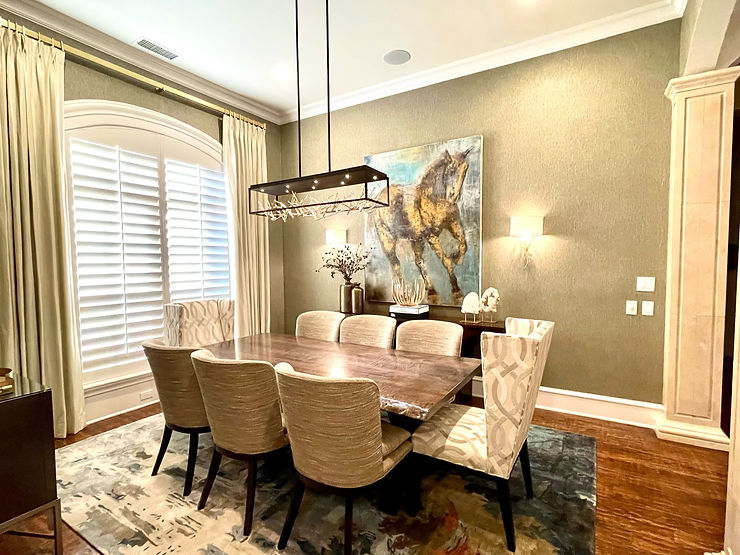
For example, a statement chandelier can visually anchor the dining area, while an appropriately sized rug helps define the seating arrangement.
When selecting a dining room rug, consider one that extends approximately 24 to 30 inches beyond the table on every side, so chairs remain on the rug when pulled out. Larger dining chairs may require additional space.
Other elements that contribute to balanced proportions include:
- A sideboard that complements the table without restricting circulation.
- Artwork or mirrors scaled appropriately to the wall.
- Window treatments that emphasize architectural height.
- A coordinated combination of furniture finishes and upholstery.
The objective is not simply to fill the dining room but to create a space that feels intentional, comfortable, and refined.
Frequently Asked Questions About Formal Dining Table Sizes
What is the most common dining table size for eight people?
A rectangular dining table approximately 72 to 96 inches long and 36 to 44 inches wide can typically accommodate eight people, depending on chair size and table leg placement. For formal entertaining, a longer table often provides greater comfort.
How much space should be between a dining table and a wall?
A minimum of 36 inches is commonly recommended, but 42 to 48 inches provides more comfortable movement around seated guests. Wider clearances are especially helpful in formal dining rooms used for entertaining.
Should a dining table be centered in the room?
Centering the dining table often creates visual balance, particularly when the room has symmetrical architectural features. However, the best placement depends on doorways, traffic flow, furniture, and lighting.
Is custom dining furniture worth considering?
Custom dining furniture can be valuable when a room has unusual dimensions or when homeowners want specific materials, proportions, and seating arrangements. It allows the table to be designed around the space rather than forcing the space to accommodate a standard piece.
Create a Beautifully Balanced Dining Room With hōme•ol•o•gy
The right dining table can transform your formal dining room into a welcoming space for meaningful gatherings, celebrations, and everyday moments.
At hōme•ol•o•gy, we believe beautiful interiors should be as functional as they are sophisticated. From selecting appropriately scaled furnishings to creating cohesive room layouts, thoughtful design makes every detail feel intentional.
Ready to create a formal dining room that combines elegance, comfort, and timeless style? Contact hōme•ol•o•gy today to begin planning your ideal space.